
14 May 2026 · 5 min read
Mic Cover Sizing Guide: How to Measure and Choose the Right Fit
A foam cover that is one millimetre too tight will tear in a week. One millimetre too loose will rotate while you talk. Here is exactly how to measure your mic so neither happens.
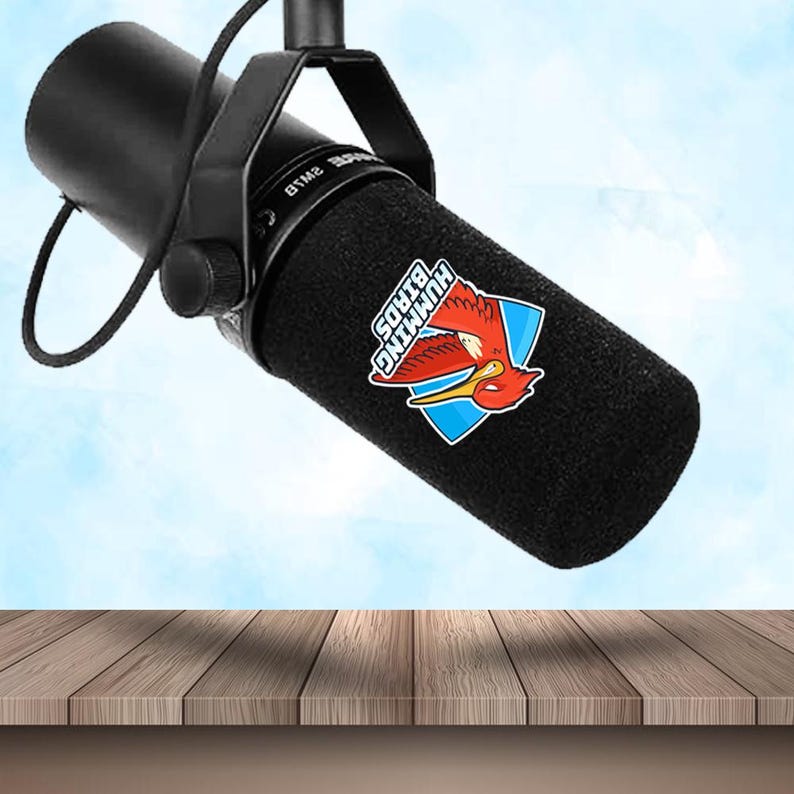
A custom foam mic cover that's one millimetre too tight will tear within a week. One millimetre too loose will rotate while you talk. Sizing matters more than people realise.
This is the exact measurement process we walk every custom-mic customer through, plus a quick chart for the most common microphones.
The two numbers that matter
A foam mic cover is defined by two dimensions:
- Internal diameter (ID): the width of the hole, in millimetres. This should match the widest part of your microphone head.
- Height (H): how far the foam extends past the top of the mic head. This is mostly aesthetic, but affects how visible your branding is on camera.
A third number — wall thickness — is fixed at 8-12mm for most podcast covers. You don't usually choose this; it's set by the manufacturer.
How to measure your mic
You need: a ruler or calipers. Digital callipers (£8 on Amazon) give the cleanest measurement, but a tape measure works.
Step 1: Diameter
Measure across the widest part of the mic's head (the bit that fits into the foam). For a Shure SM7B, this is the squared-off black housing. For a Rode PodMic, it's the slightly bulging metal grille.Pro tip: measure from two different angles. If the mic is oval rather than circular (the SM7B is slightly squared), record both. You want the foam to fit the larger dimension.
Step 2: Height
Decide how tall you want the foam to stand above the mic head. Most people choose 60-75mm. Taller looks more visible on camera (better for branding); shorter is more discreet.Step 3: Tolerance
Add +2mm to the internal diameter. A cover that matches the mic head exactly will be too tight to slide on. The foam compresses, so 2mm of slack at rest = a snug, non-rotating fit when fitted.Quick chart: common mics
If you don't want to measure, here are the dimensions we use for our made-to-fit covers:
| Microphone | Internal Diameter | Recommended Height | |---|---|---| | Shure SM7B | 54mm | 70mm | | Shure SM7B (A7WS replacement) | 56mm | 100mm | | Shure SM58 / Beta 58 | 52mm | 60mm | | Rode PodMic | 56mm | 65mm | | Rode PodMic USB | 56mm | 65mm | | Rode NT1 / NT1-A | 50mm | 70mm | | Electro-Voice RE20 | 60mm | 80mm | | Heil PR40 | 58mm | 70mm | | Audio-Technica AT2020 | 50mm | 65mm | | Shure MV7 / MV7+ | 56mm | 70mm | | Blue Yeti | 60mm | 75mm | | Rode Wireless Go II | 22×42mm (rectangular) | 35mm |
What happens if the size is wrong
Too tight (foam ID smaller than mic head):
- Foam tears at the bottom seam after 5-20 wear cycles
- Can damage paint on chromed mics (rare, but happens with Heil)
- Hard to fit cleanly
Too loose (foam ID more than 4mm larger than mic head):
- Rotates when you talk close to the mic
- Falls off if the mic is angled or moved
- Pops off completely during long recording sessions
Slightly loose (2-3mm larger):
- This is the correct fit
- Slides on easily, sits firm, no rotation
Material thickness
Most podcast mic covers use 8-10mm wall thickness PU foam. Broadcast covers (Heil-style) go thicker, 12-15mm. The thicker the wall, the more plosive protection — but also the more visible bulk.
For most podcast/YouTube use cases, 8-10mm is right.
When you can't measure
If your mic isn't on our chart and you can't access it (it's at a studio, you're buying as a gift), send us:
- The mic make and model
- A photo with a coin or ruler in shot for scale
We've sized covers for over 200 different mic models. There's a good chance we have a measurement on file or can spec one from a photo.
Order with confidence
Every custom mic cover we ship is sized to your specific mic model — you don't have to remember any of this. We've already done the measurement. Just pick the cover for your mic from our shop or, for unusual mics, contact us with your model and we'll size and quote.
UK-made, 3-day turnaround, free returns if the size is wrong.
Shop the gear in this guide
Ready to brand your microphone?
Custom microphone branding and same-day printing from London E1. Production 1–2 working days after artwork approval.
Browse the shop