13 May 2026 · 6 min read
Why Your Podcast Mic Looks Unprofessional (And How to Fix It)
There are five reasons your podcast mic looks amateur on camera. Four of them cost less than fifty quid each to fix, and most podcasters have done none of them.
Your audio is fine. Your camera is fine. Your video edit is fine. But every time you watch the recording back, something about it looks... amateur. And you can't tell what.
The answer, 90% of the time, is the mic. Specifically: five things about the mic that pros fix early and amateurs never notice. Here they are, in order of how much they're hurting you.
1. The grey foam windscreen
This is the single biggest visual giveaway. Every mic ships with a grey or black foam cover. Every podcaster has the same one. It's the mic-setup equivalent of using the default Windows desktop background.
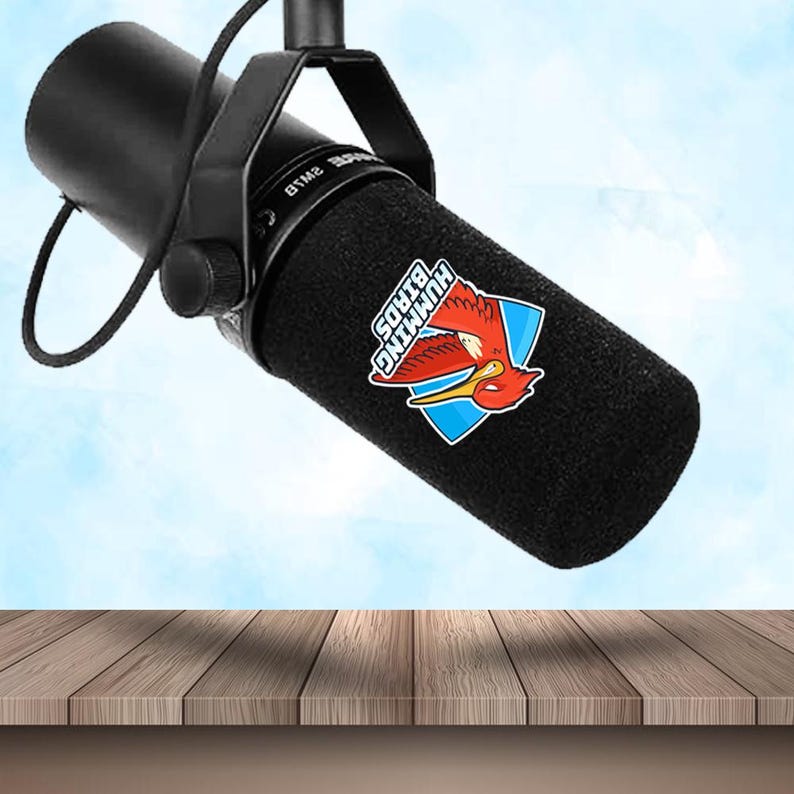
When you watch a Tier-1 podcast (Diary of a CEO, Joe Rogan, H3, the New York Times' shows), the mic foam is never stock. It's always either solid colour, the show's logo, or the network's logo.
Fix: a custom-printed foam cover. £20-30. Made to fit your specific mic in 3 working days. Single biggest professional-vs-amateur visual change you can make for under £50.
2. The mic arm angle
Most amateurs mount the mic horizontally, pointing across the desk. The mic is parallel to the floor.
Pros mount the mic at a 30-45° angle, coming down toward the mouth from the side or above. This:
- Hides the mic body partially behind your face (you see less mic, more you)
- Gets the cardioid pattern hitting your mouth at the optimal axis
- Looks like every pro recording you've ever watched
Fix: free. Loosen your boom arm, tilt the mic 30 degrees, lower the boom by 4-6 inches. Done.
3. The visible XLR cable
You spent £400 on a mic and stuck a £5 black cable trailing across the desk into shot.
Pros either run cable inside the boom arm channel (Rode PSA1+ does this), tape cable behind the boom invisible to camera, or — for the highest-budget setups — use coiled fabric-sleeved cables that look like a deliberate design choice.
Fix: £8 cable sleeve from Amazon if your arm doesn't have an internal channel. Buy black if your arm is black. Buy white if your arm is white.
4. The boom arm finish
A surprising amount of cheap boom arms have shiny chrome springs. Chrome reflects every light in your room and creates moving hotspots in your background.
Pros use matte black or matte white booms exclusively. Some go to extreme lengths — wrapping the springs in matte black gaffer tape — to kill all reflection.
Fix: matte black gaffer tape (£3) wrapped around any chrome part of your existing arm. Or buy a Rode PSA1+ which ships matte black throughout.
5. The pop filter you don't need
Half the podcast setups online have a pop filter (the round mesh disc) AND a foam windscreen AND nothing else. This is two redundant pieces of plosive protection plus visual clutter.
Either:
- Foam cover only (most podcasts — your mic is close enough this is sufficient)
- Pop filter only (you're singing — the filter sits further from the mic and works better at distance)
Not both. Pros choose one.
Fix: remove the pop filter if you have a foam cover. The foam alone handles 95% of plosives at podcasting distance.
Bonus: the head height
Amateur podcasters sit the mic at chest height looking up at their chin.
Pros put the mic at mouth height, level with the lips, slightly off-axis. Both audio AND visuals improve.
Fix: raise your boom arm 4-6 inches. Now your shot frames you better, your audio has fewer chest-cavity resonances, and your mic is closer to where Tier-1 podcasts position theirs.
The order matters
If you do all of these, your setup goes from "amateur YouTube" to "looks like a real podcast" in one Saturday afternoon. Total spend: £30-50 (the cover is the most expensive single change).
We're slightly biased because we make custom mic covers for a living, but #1 on this list is by far the biggest visual lift. You can do everything else perfectly and the grey foam still pulls the shot down. Replace it once, you'll never go back.
See covers by microphone model, or browse the popular options for the SM7B, SM58, PodMic and others.
Shop the gear in this guide
Ready to brand your microphone?
Custom microphone branding and same-day printing from London E1. Production 1–2 working days after artwork approval.
Browse the shop