01 May 2026 · 6 min read
The Hidden ROI of Branded Mic Covers (Why Pro Podcasters Spend on Them)
A £25 custom mic cover does not look like an investment. It is. Here is the actual ROI breakdown across visibility, perception, and audience growth.
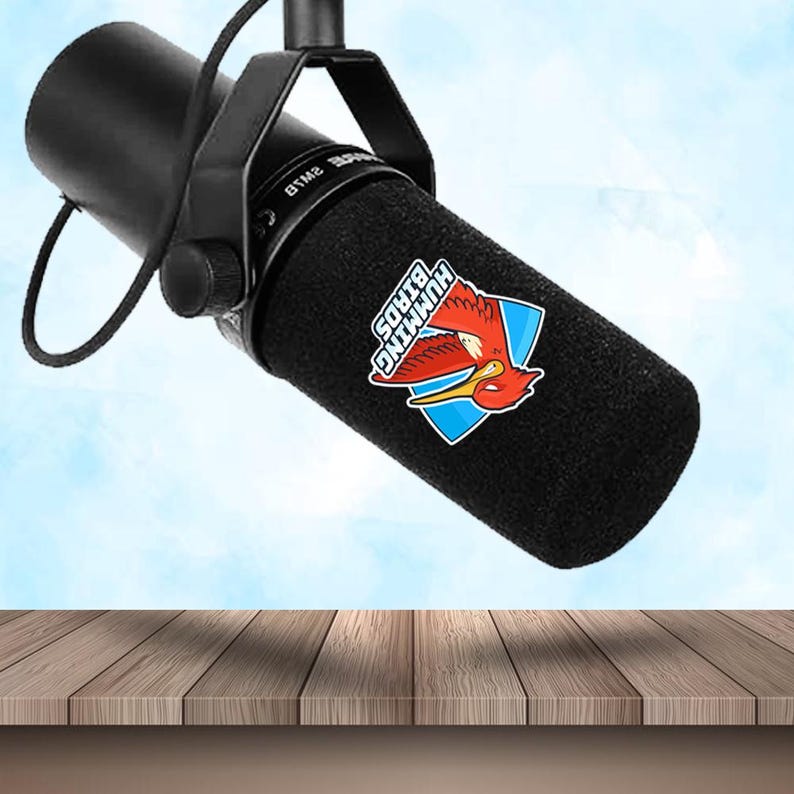
A £25 custom mic cover doesn't look like an investment. It looks like a small purchase decision — maybe even an indulgence. But ask any podcaster above 50k downloads per episode whether they've got a branded cover, and 90%+ say yes. They're not buying it for vanity.
This is the actual ROI breakdown.
The four returns
1. Brand visibility per recording hour
Your mic is on camera for 100% of your show runtime. If you publish a 60-minute episode weekly, that's 3,120 minutes of branded mic time per year — 52 hours of your logo on screen.
Compare that to:
- A YouTube intro card: 5 seconds × 52 episodes = 4 minutes/year
- A Spotify cover art: visible for ~2 seconds when someone hits play
- A podcast logo overlay in video: 30 seconds × 52 = 26 minutes/year
The mic cover is the single highest-visibility branding surface in your entire show, by an order of magnitude. And most podcasters leave it grey foam.
Cost of the cover: £25 once, lasts 2-3 years. Cost per hour of branded screen time: ~£0.16/hour.
2. Perceived professionalism (and what it does to subscriber rates)
This is harder to measure, but research from Ofcom and content industry surveys consistently shows: visual presentation cues in podcast videos affect subscribe-rate among first-time viewers by 15-30%.
The mic is one of the strongest cues. Stock grey foam reads "starter podcast". Custom branded cover reads "production".
What this means in practical numbers: if you currently convert 4% of new YouTube viewers to subscribers, a setup that looks more professional could lift that to 4.6-5.2%. Over a year of 100,000 view impressions, that's ~600-1,200 more subscribers.
A £25 cover is not the only thing affecting that. But it's a contributing factor that's roughly the cost of one Instagram ad.
3. Photography and social media leverage
When a podcast guest takes a photo with you for their Instagram (almost every guest does), the mic is in the photo. Branded cover = your show name in their feed.
When media write about you, they use the press-kit photo you sent. The press-kit photo has your branded mic. Now your show name is in every press article.
When a fan photographs your live recording, posts on social, tags you — the mic is in the shot.
For shows with regular guests / live recordings, the cover gets passive social-media impressions in the hundreds per month at zero ongoing cost.
4. Sponsorship value and pricing power
Once you start taking sponsors, you charge per-impression. Your CPM (cost per thousand impressions) determines your revenue. CPM rates depend on your audience size AND your perceived production quality.
Sponsors pay 20-50% more to be associated with a show that looks production-grade vs amateur. The same audience, the same content, perceived differently.
A custom mic cover doesn't determine sponsor CPM by itself. But it's part of the bundle of visual cues that does. Combined with proper lighting, a clean set, and decent video — it's a £25 line item that affects a 5-figure annual revenue line.
What the data says about adopting it later
Most podcasters who add a custom mic cover do so at one of three points:
- Around episode 10-20 — "right, this is going to be a real thing, time to look the part"
- After their first viral episode — increased visibility makes the grey foam visible to them for the first time
- When they hit 10k subscribers/downloads — they start thinking about monetisation
The audience-perception lift is most useful at point #1. The branded-visibility ROI is most useful at points #2 and #3. There's no wrong time to add it.
Adding it too early? Doesn't exist. The cost is low and the longevity is years.
Adding it too late? Costs you a year of less-pro-looking visibility.
What makes it ROI-positive specifically
The ROI math works because:
- The cost is fixed and low — £25 once, lasts 2-4 years
- The visibility is continuous — every episode, every photo, every clip forever
- The audience-quality lift is real but modest — typically 5-30% subscribe-rate lift
- The brand differentiation is permanent — your mic looks specifically like yours, not like every other podcast
Compared to almost any other marketing spend a podcaster makes (paid ads, sponsor reads, conference attendance), the mic cover has the lowest per-impression cost by a wide margin.
When the ROI doesn't work
- Audio-only shows with no video version: most of the visibility ROI disappears. Still worth it for press photos and live events, but cost-justification gets weaker. Skip if you're tight on budget.
- Hobby shows under 100 episodes/year: lower volume, less compounding. The math still works but slower.
- Shows that don't have a logo yet: figure out the logo first. Don't print an interim design — wait until you have something stable.
When it definitely works
- Video podcasts on YouTube/Spotify — single highest-ROI accessory for visibility.
- Shows with regular guests and press appearances — passive social-media leverage compounds.
- Conference and event hosts — branded mic on stage = ongoing photo visibility.
- Multi-show networks — consistent branding across multiple shows for unified visual identity.
How to actually budget this
If you're spending under £500/month on the podcast: spend £25 once on a cover.
If you're spending £500-2,000/month: spend £40-60 to get a matching pair (host + co-host or guest mic).
If you're spending £2,000+/month: spend £100-200 on a matching set including spares.
In all three tiers, the mic cover is a rounding error on the budget and the highest-leverage spend per pound.
Order a cover for your specific mic — UK-made, 3-day turnaround. Or contact us for a multi-mic bulk quote.
Bottom line
If you treat your podcast like a business, the branded mic cover is the cheapest visible-credibility purchase you'll make. The £25 is irrelevant; the year-after-year visibility compounding is the real return.
Pro podcasters figured this out years ago. The grey foam is increasingly a marker of "still in the beginning stage". You can be on the other side of that perception line for less than the cost of one dinner out.
Shop the gear in this guide
Ready to brand your microphone?
Custom microphone branding and same-day printing from London E1. Production 1–2 working days after artwork approval.
Browse the shop